
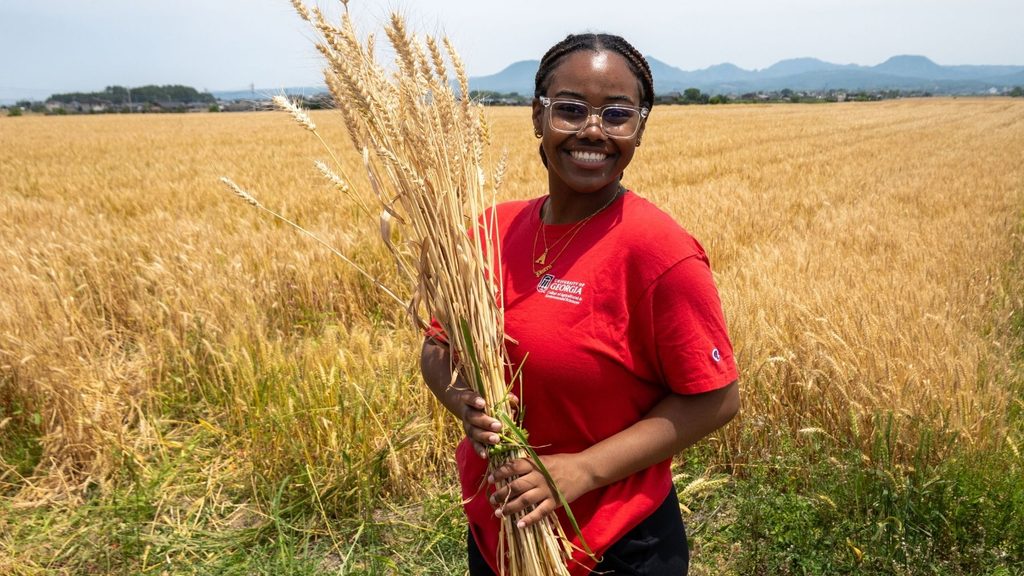

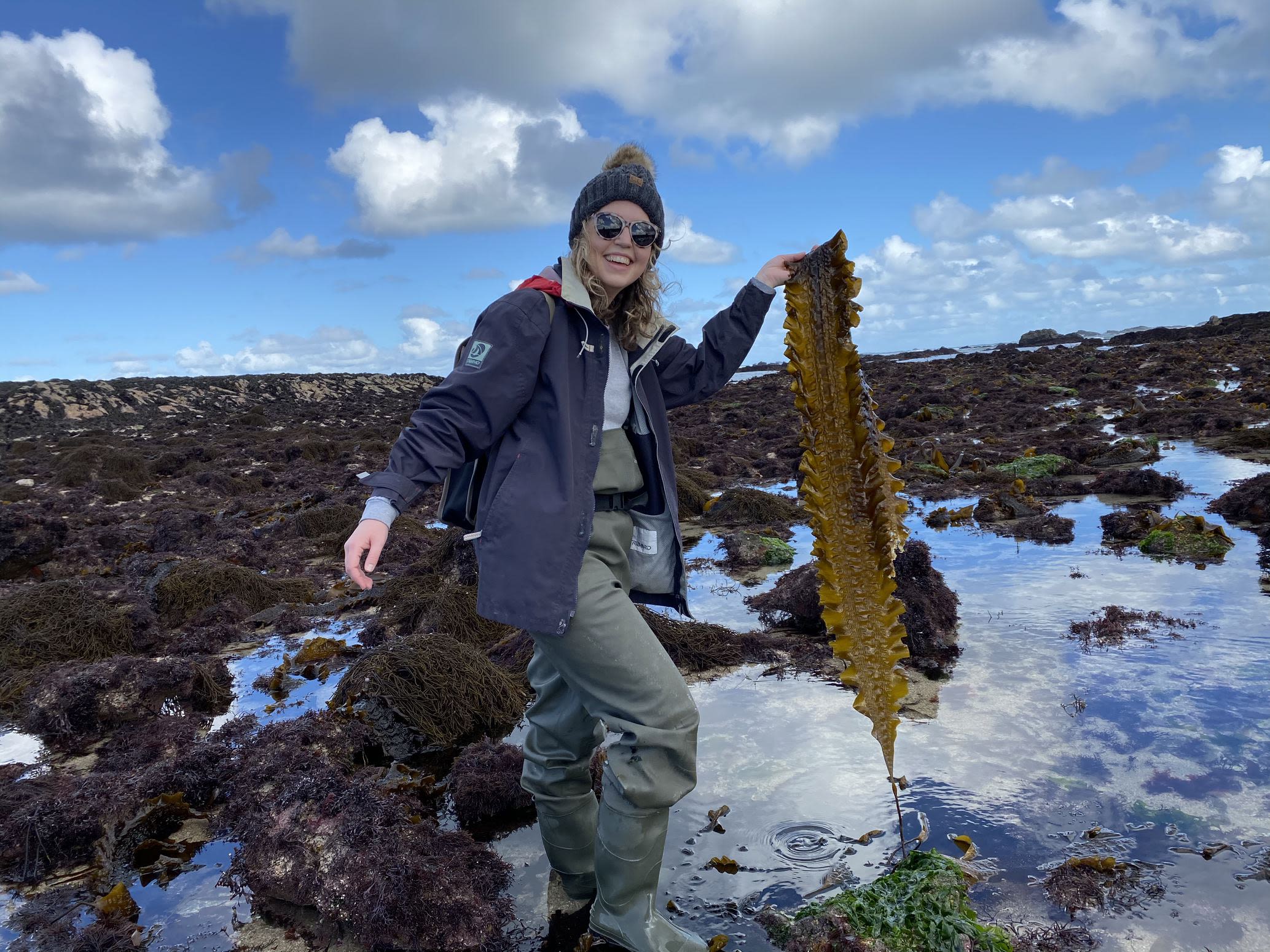
The International Agriculture Certificate (IAC) builds intercultural competence and foreign language proficiency. Students complete internationally focused coursework and an international capstone experience aligned with their academic and career goals. The international capstone experience is designed to be independent and immerse students in the local culture through an internship or semester exchange abroad.
“I got more out of this experience than I have from any other learning opportunity. Take advantage of the time you have… you can learn a lot more by visiting other places.” -2025 IAC Participant
What you’ll do in the IAC Program
- Improve Foreign Language Proficiency through 2 semesters of foreign language coursework (or equivalent)
- Gain Global Perspective through 3 internationally relevant electives and 1 international agriculture course
- Participate in an International Immersion Experience through a minimum 8-week internship or semester exchange in a country where English is not the primary language
The Office of International Programs recommends students start planning their international agriculture experience at least one year in advance of when they would like to travel abroad. Students are encouraged to meet with Vicki McMaken to begin discussions on customizing an educational experience that is unique to them. The office can also assist with securing internship or semester exchange placement, financial aid, and funding for travel and living expenses. Follow the below steps to get started:
- Make an appointment to learn about the program by emailing Vicki McMaken at caesoip@uga.edu.
- Consult with your academic advisor about enrollment in the certificate program.
- Submit application materials, listed below, to the Office of International Programs at caesoip@uga.edu.
- Explore scholarships for your experience abroad.
- Enroll in the necessary courses
- Finalize plans for your international experience.
- Conduct your internship or semester exchange.
- Fulfill all requirements and receive your certificate.
Though the program is hosted by the UGA College of Agricultural and Environmental Sciences (CAES), the certificate is open to all graduate and undergraduate students at the University of Georgia.
Undergraduate program
The coursework undertaken by most International Agriculture Certificate students will also satisfy the UGA Peace Corps Prep Certificate Program requirements. For more information see the Peace Corps Prep Certificate Program brochure.
The program includes 21 hours of coursework. Students must select from the courses below to fulfill the requirements.
- International agriculture courses (3 hours):
- Topics in International Agriculture preferred course (AESC 3150) OR
- Reflections on Fighting Hunger (ALDR 3820) OR
- International Agriculture Development (ALDR 4710/6710)
- International agriculture internship or semester exchange (3 hours):
- International Agriculture Internship (AESC 3910/6910) OR
- Note: Your internship must be completed in a country where English is not the primary language and incorporate a minimum stay of eight weeks.
- Semester Exchange by enrolling in courses directly through a host university for transfer credit toward a UGA degree.
- International Agriculture Internship (AESC 3910/6910) OR
- Foreign language (6 hours): Completion or exemption through the second semester level and/or participation in a language-intensive student abroad program.
- Internationally-oriented courses (9 hours): Choose from a wide selection of courses with a global focus. Pre-approved CAES courses are listed below. To request acceptance of a course not on the below list, the course syllabus must be submitted to the Office of International Programs at caesoip@uga.edu for consideration.
View internationally-oriented course opportunities…
- Agricultural and Applied Economics
- Food Fights: Analysis of Global Food Policy Issues (AAEC 2710)
- Introduction to Agricultural Policy (AAEC 3400)
- Applied International Development Economics (AAEC(AFST)(ENVM) 4720)
- International Agribusiness Marketing and Management – Uruguay Study Abroad (AAEC(ADSC) 3911)
- The World Food Economy (AAEC 4730)
- Agricultural and Environmental Sciences
- Effects of Global Agriculture on World Culture (AESC 2050)
- Food Production Systems in Western Europe (AESC 3160)
- Agricultural Ethics (AESC(EETH) 4190/6190)
- Agricultural Education
- Exploring Food, Environment, and Global Systems – Australia Study Abroad (AGED 4820)
- Agricultural Leadership
- Advanced Leadership Theories, Ethics, and Culture (ALDR 4540/6540)
- Comparative Analysis of Agriculture, Community, and Org. Development – Morocco Study Abroad (ALDR 4610)
- Global Issues in Agriculture and Environment (ALDR 4600/6600)
- Global Leadership: Strategies for Leading Across Cultural Differences (ALDR 4620/6620)
- Agricultural Communication
- Culture-Centered Communication and Engagement (AGCM 4300S)
- Community-Based Agricultural and Environmental Science Communication (AGCM 4310/6310)
- Animal and Dairy Science
- Food Production Systems in Asia (ADSC 3950)
- Crop and Soil Sciences
- Social Sustainability in Agricultural and Food Systems (CRSS 4020S/6020S)
- Agro-Ecology (CRSS(HORT) 4400 /6400)
- Agro-Ecology Laboratory (CRSS(HORT) 4400L /6400L)
- Exploring International Agricultural Systems (CRSS 4950)
- Entomology
- Insect Natural History (ENTO 3140-3140L)
- Tropical Entomology (ENTO 4850/6850-4850L/6850L)
- Environmental Economics and Management
- Environmental Economics (ENVM 3650)
- Food Science and Technology
- Viticulture and Enology in the Mediterranean Region – Italy Study Abroad (FDST(HORT)(PATH) 3050)
- Horticulture
- Understanding and Communicating with the Lation Community in the Green Industry (HORT 2990S)
- Introduction to Fruit Crops (HORT 3020)
- International Horticultural Perspectives and Practices (HORT 4925/6925)
- Herbs, Spices, Medicinal Plants (HORT(ANTH)(PBIO) 3440)
- Horticultural Study Tour (HORT 3900)
- Current Issues in Horticulture (HORT 4990/6990)
- Plant Pathology
- Plants, Pathogens, and People (PATH 2010)
- Fungi: Friends and Foes (PATH(PBIO) 3010)
- Poultry Science
Program specific scholarship opportunities are listed below…
- Edward T. and Karen Kanemasu Global Engagement Award: The Edward T. and Karen Kanemasu Global Engagement Award supports students who are spending an extended period of time completing an internship or conducting research in a non-English speaking country with a focus on service-learning projects addressing critical issues related to the alleviation of hunger and poverty.
- International Agriculture Certificate Scholarship: The International Agriculture Certificate Program provides $1,000 scholarships for international activities to Undergraduate and Graduate International Agriculture Certificate students.
Participants are also encouraged to review other funding opportunities on our CAES International Scholarships page.
Stories from IAC Alum



Victoria Collins McMaken
Coordinator of International Programs
Office of International Programs
Athens, GA 30602